For Alejandro Blanco, Nomadict · 17 September 2026 · plain language, no physics jargon
1. The whole thing on one page
The material history and the questions of Raconteur Road
Read downward. A shared material history leads to Earth, life and human thinking. People use Earth's materials to build computers and train AI. Biological and machine thinking lead to an open question about other possible forms of thinking. Chapter XI, Annealing, is a practice for continuing the journey, rather than an event in this history. Chapter links lead to the reading key below.
Mostly hydrogen and helium in the early universe. Stars and their remnants make and scatter heavier elements. The material of planets. Of trees. Of us.
A world in motion.
Differences drive flows. Patterns form and change.
Could these belong to a larger family of thinking things?
Whether AI can be conscious remains an open question.
2. The same thing in words
Raconteur Road uses photographs and the road between them to follow a question: how did the same universe produce a landscape, someone who can look at it, and now a machine that can answer back? The twelve chapters follow that story from its material beginnings to thinking, consciousness and the problem of keeping our bearings as the world changes.
The story starts with the material. In the early universe, ordinary matter was mostly hydrogen and helium, with a trace of lithium. The carbon in a tree, the oxygen we breathe and the silicon in a camera came later. Gravity gathered gas into stars, where heat and pressure allowed light elements to fuse into heavier ones. The Sun, our nearest star, is doing that now.
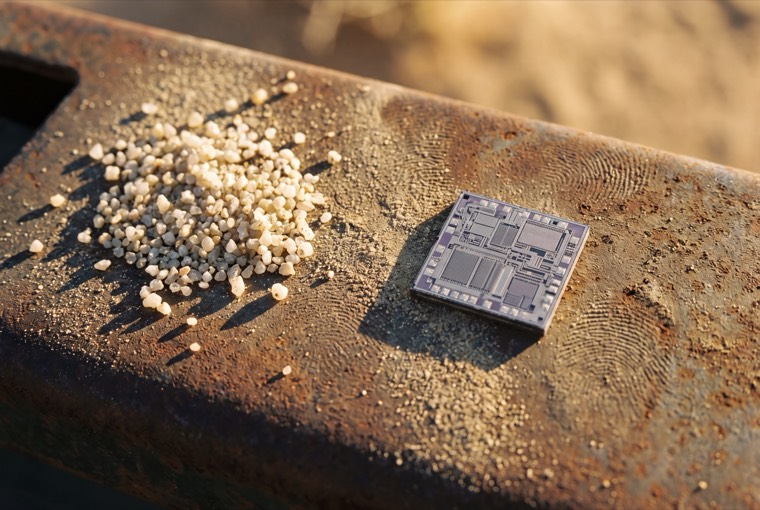
I–II The same material, twice — quartz grains and a bare die
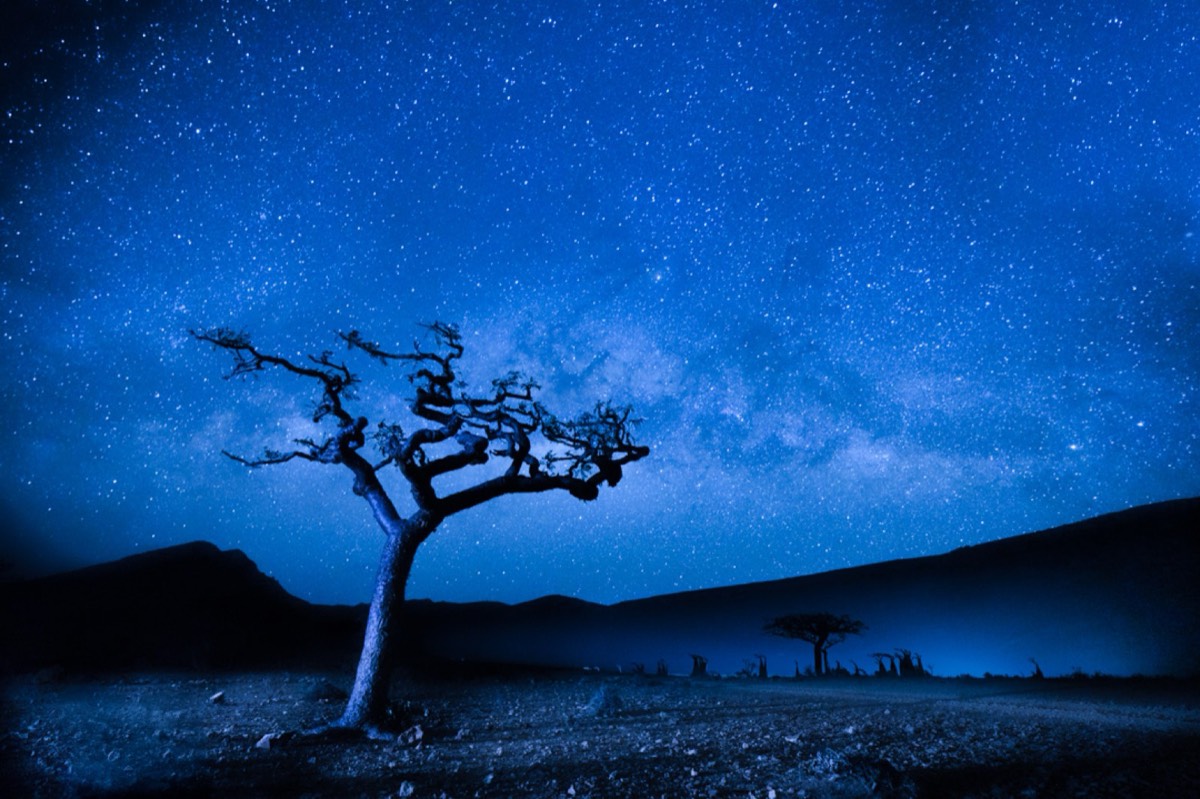
Stars made many of the heavier elements; their later lives, explosions and the collisions of their remnants made and scattered others. That enriched material went into later stars and planets, including Earth. The iron in our blood and the silicon in a chip share that long history. The opening chapters ask what changes when the same material is arranged differently, and what we mean by the names we give those arrangements (chapters I and II). In the photograph of the frankincense tree under Socotra's stars, the tree and the person behind the camera belong to the history overhead.
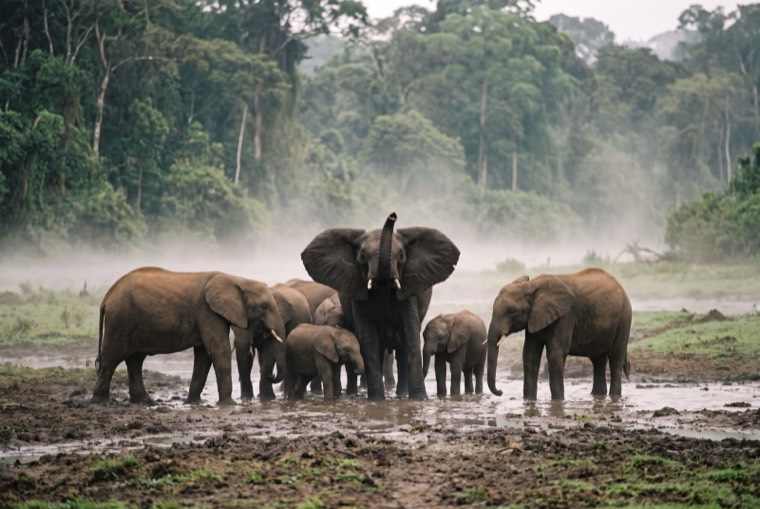
I–II Frankincense tree under the Milky Way, SocotraVII–X Elephant family, Congo
On Earth, some arrangements became able to keep themselves going — taking in energy and material, repairing themselves and reproducing. We call that life. We are still working out how it first arose. Over billions of years it diversified, and some of its branches developed nervous systems and brains. Biology is chemistry made thinking. Here, thinking means using what has been learnt to interpret a situation, form an answer or choose an action, and revise it as new information arrives. It is a description of abilities we can examine (chapters VII–X).
IX–X Sand made thinking — a wafer in the dune
Then one of those thinking arrangements found a second route. We extracted silicon from silica, purified it, made circuits on it and built computers. On those computers we trained systems that can recognise patterns, use language and work through problems. Within a few human generations, matter arranged by people began doing things we had associated with minds. AI is sand made thinking. The phrase brings the material back into view: however remarkable the answer, there is a physical system producing it.
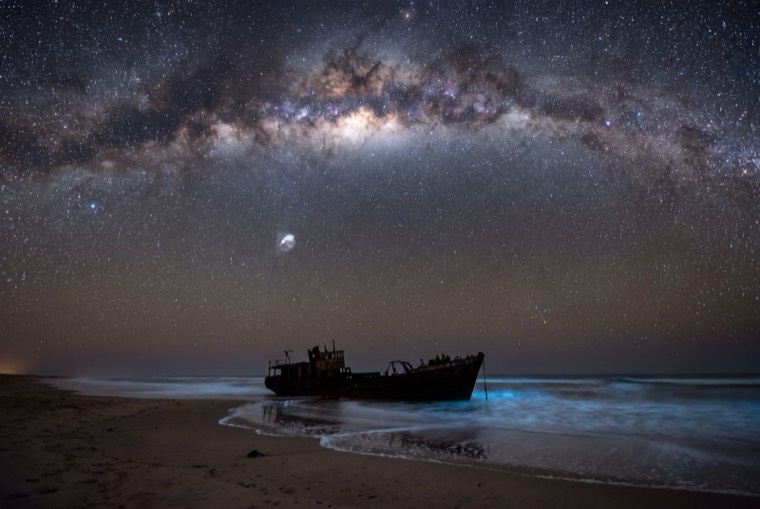
XII Milky Way, Skeleton Coast
That gives the project its central comparison: biological thinking and machine thinking, with the second growing out of the work of the first. Their common origin does not tell us whether they have the same inner life. It does invite us to ask whether they could belong to a larger family of thinking things, with other forms we have not encountered (chapter XII).
Asking what all this is for can send us in circles. A mountain does not need a purpose to explain its existence. Rock rises, weathers and erodes under physical forces. Raconteur Road begins with the same attitude to our own existence: we are consequences of the universe, without a task it assigned us. People give their lives purposes and build machines for purposes; those are choices made within the world. The freedom is in what we choose to do with being here.
X The observer
Consciousness makes the comparison harder. We know experience from the inside — the colour of that mountain, the cold against a hand, the feeling of being the person looking. What we lack is an agreed explanation of how such experience arises, and a decisive test for recognising it in a machine. A system can produce a convincing account of a sunset without that settling whether it experiences anything. Raconteur Road asks whether AI could become conscious and leaves the answer open (chapter X).
IX The one way across
Alongside that question is one we can investigate more directly: can it find its way back after something goes wrong? We usually judge an answer by whether it is correct. That matters, but acting on an answer changes things. We also need to know what the action leaves us able to do, and whether we can recognise and correct a mistake before the remaining choices disappear (chapter IX).
Suppose you write an email to a business partner about a client you are both quoting. Every figure is correct, including the lowest price you would accept. Then you select the wrong address and send it to the client. The accurate figures have disclosed something you meant to keep private. You may salvage the negotiation, but you cannot make the client unknow your floor price.
That is why correctness alone is not enough. Recovery means being able to notice trouble, change course and regain the ability to carry on. Sometimes an action can be reversed. Sometimes the best remaining course is to repair what can be repaired and proceed from a changed position. Some actions remove choices permanently, which is why the checking has to happen before those actions are taken. The research behind the project studies this ability to recover; it does not treat it as proof of consciousness.
An AI system given the ability to send, publish, spend or delete brings the same problem into much faster operation. It may produce many correct answers while acting faster than the consequences can be checked. The question then includes whether it can detect a failure and recover its operation itself, or whether a person must intervene and reset it. A reset of the system does not unsend its email.
The pressure reaches us too. New tools change what we can make, what our skills are worth and what other people expect from us. When change arrives faster than we can understand and respond to it, familiar habits can stop serving us. The project's response is to keep learning and exploring, at a pace that leaves us able to notice when we are wrong. Waiting for the world to stop changing is a poor basis for a life. So is moving too fast to see where we are going.
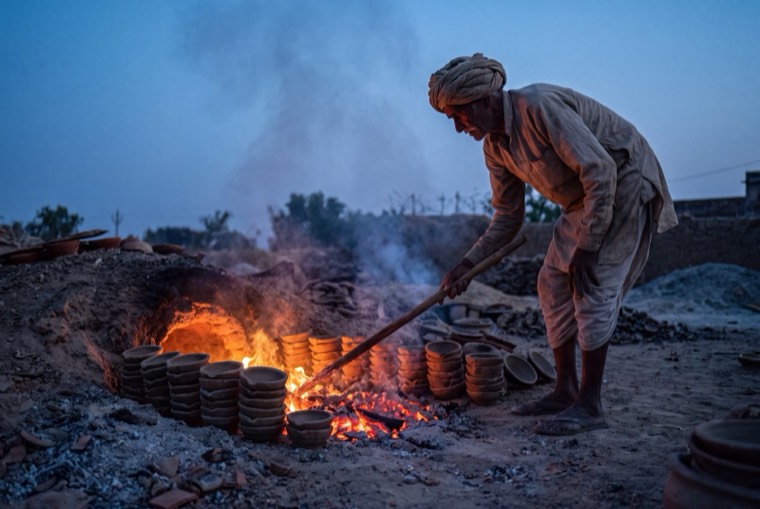
XI The potter's kiln, Rajasthan
That is the discipline behind Drive on. Commit to making something well, then remain able to move beyond it. A successful picture can become the one we keep trying to take again; a failure can become the reason we stop looking. “The goal is to have no goal” means refusing to make either one the final arrival. Finish the work, carry what it taught you and keep going (chapter XI).
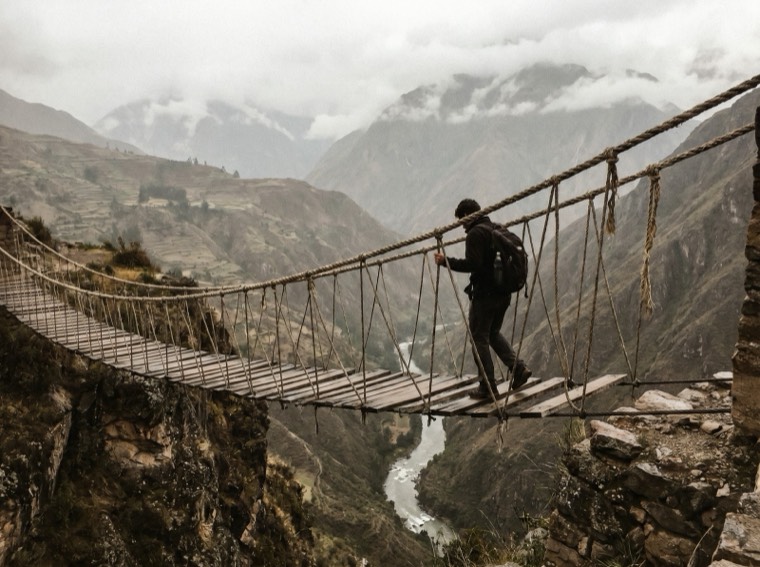
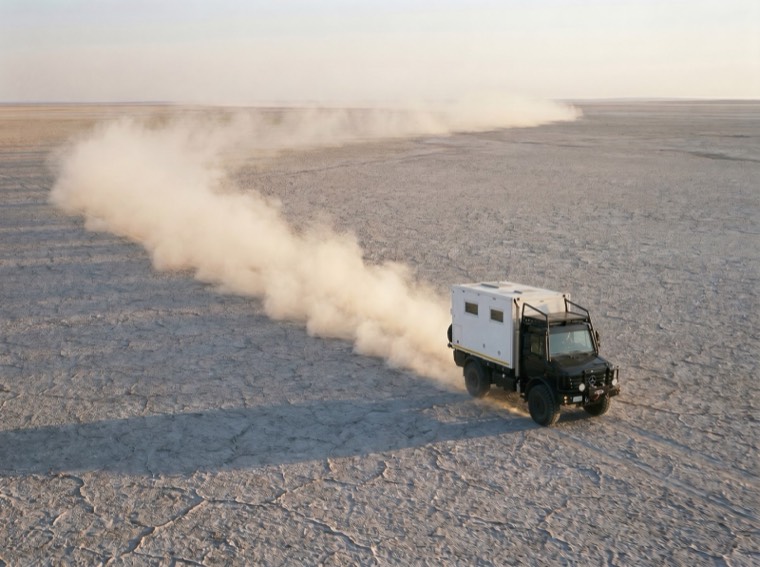
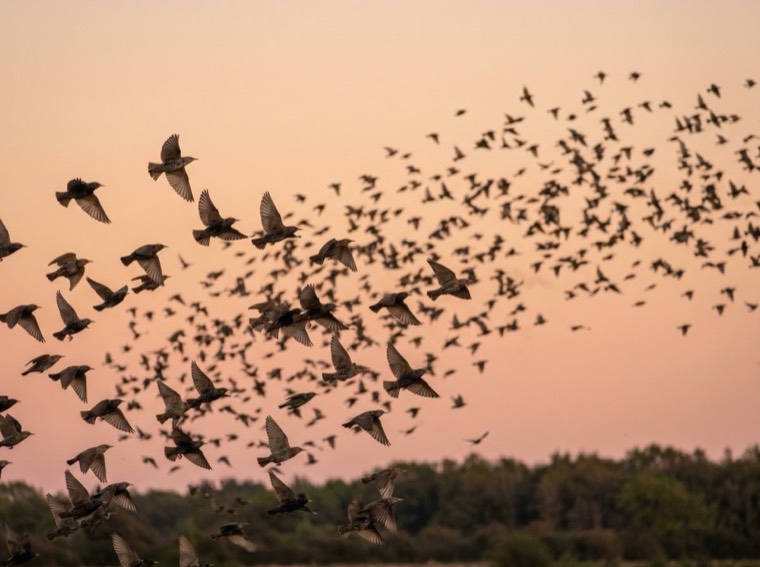
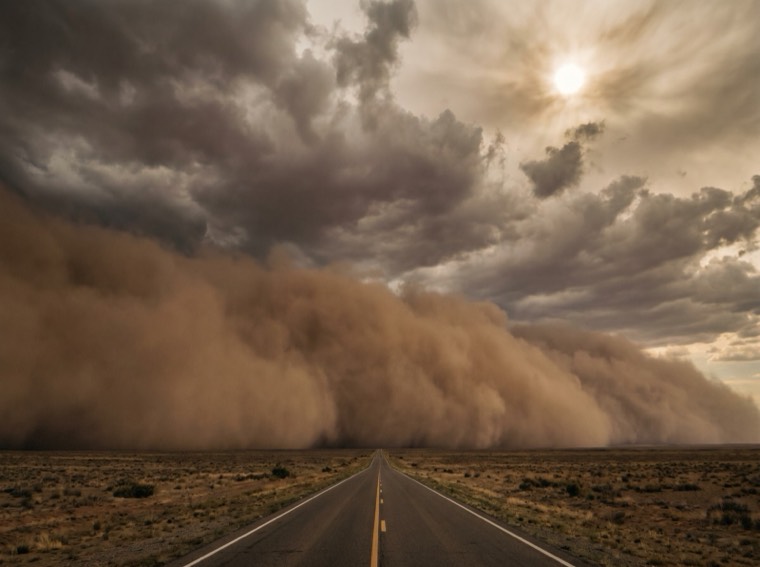
The photographs carry the rest of this argument in the same way. Dust spreading across the Makgadikgadi opens the question of why some changes do not run backwards (III). A flock caught mid-turn opens the chapter on information: what changes when separate parts begin responding to one another (IV)?
III The trail, hangingIV Starlings, the signal
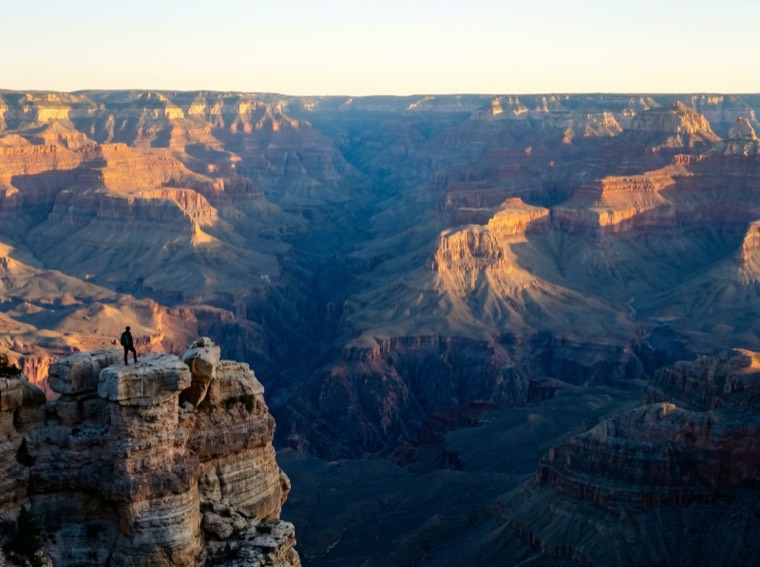
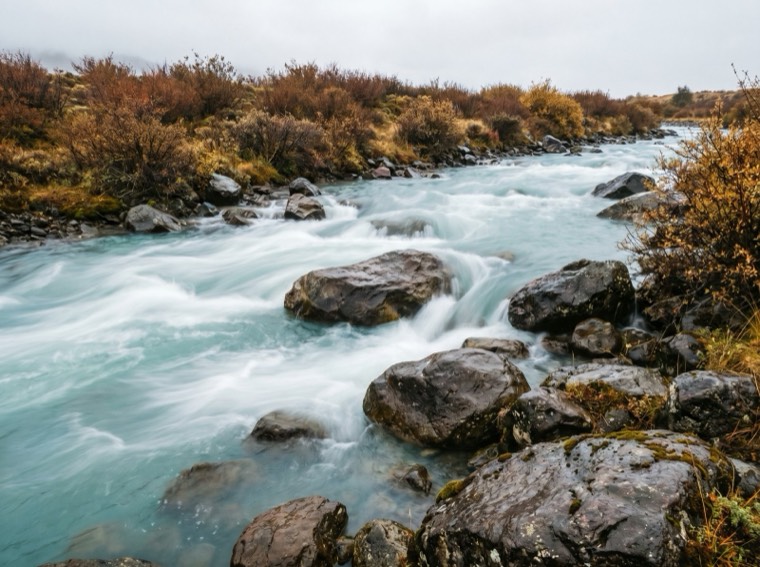
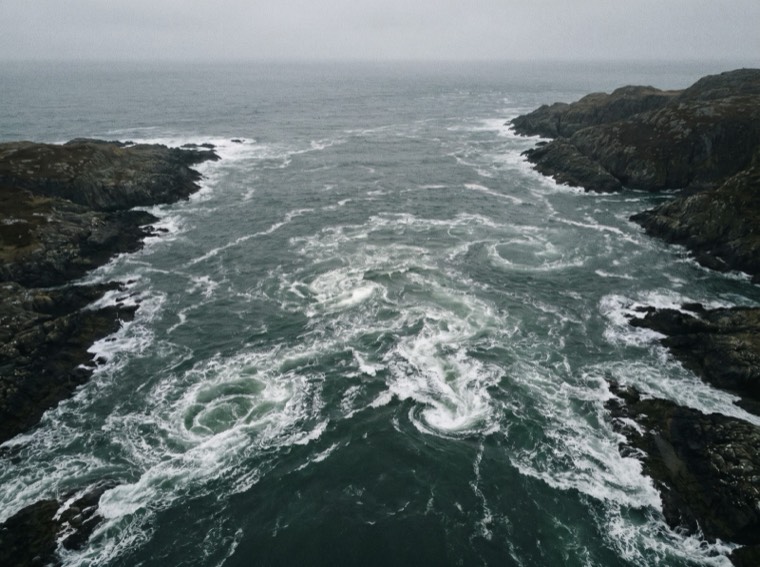
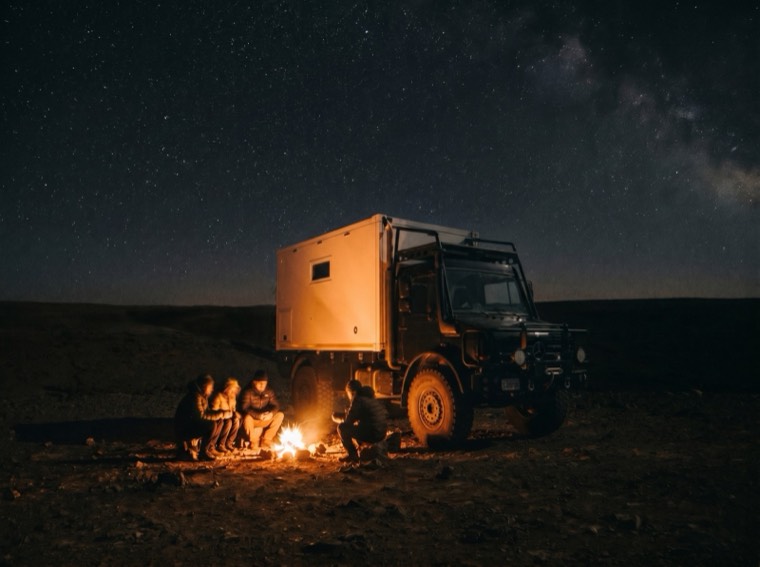
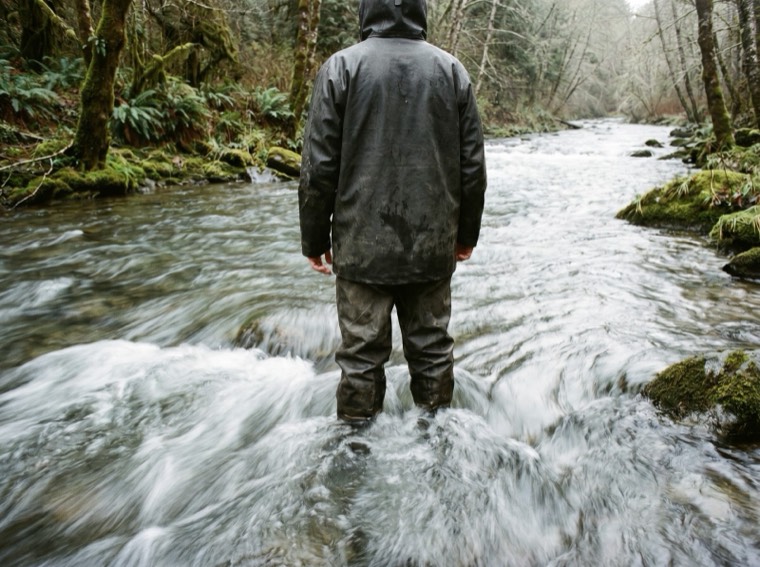
A river descending through rock shows a difference becoming movement (V–VI). A whirlpool or a flame shows a shape maintained while water or fuel passes through it (VII–VIII). The later chapters turn towards the observer: a road going into a wall of dust brings the limits of seeing and responding into an ordinary scene (IX); a person in that landscape brings us to the experience behind the looking (X). The photograph gives us something to examine. The writing carries the question it cannot answer on its own.
V–VI Patagonia, the long exposureVII The maelstromVIII Camp, the fire holds the lineIX Arizona, the wall of dustX Substrate
Chapter XI also appears in how the pictures are presented. In the frozen-moment clips, the viewpoint moves around an instant held still — falling tea, suspended dust, a breaking wave. We can inspect what would otherwise pass too quickly. Then the clip ends and the journey continues. The form enacts the same rhythm: explore, hold a moment, release it. By chapter XII, the traveller making these pictures is asking what other kinds of traveller might share the road.
The long-form writing gives those connections room to unfold. On the account, one picture and a short passage carry one part of them: first the scene, then enough words to make someone look again. A raconteur brings back stories. Raconteur Road is the journey that gives them something worth telling.
3. What this looks like as a post
The ideas above never appear on the account in those words. A post is a photograph and a short passage in the voice of the road — no physics, no lecture, one turn and a hard landing. Three examples, one for each month of the first quarter, with the frame beside each one.
Post 1 — September, the freeze
The caption: “Mint tea is poured from a height so that it wakes up — half a metre of falling arc, one glass, steam going up into the light. Nothing in the room stops for it: a table of men arguing behind him, the square going on outside, somebody's motorbike coming through where no motorbike should fit. The arc lasted about half a second. I got one frame of it. Everything else in that picture was still moving when I put the camera down.”
What it teaches, without saying so: a photograph is a piece of a process held still (chapter XI, with III underneath).
Moving version: a bullet-time pass around the pour, eight seconds long.
Post 2 — October, leave it
The caption: “A ship came ashore here in a storm and has not moved since. The sea comes up the beach twice a day and takes a little more of it, and nothing about it is coming back — no refloat, no tow, no second run at the coast. We spent an hour on it: every rusted rib, the plates going orange as the light dropped. Then we walked back up the beach and drove on. The picture was worth having. The ship is what happens when you stop.”
What it teaches, without saying so: commit to the moment, then leave it behind (chapter XI, with X).
Moving version: the swell coming up the beach past the hull.
Post 3 — November, the road between
The caption: “Three days out onto the salt and three days back, and nobody photographs the middle of it. The camels know the line better than the men do. A hundred kilos a camel, a stick, a thermos of water that tastes of the pan, and the same white nothing in front of you until the light goes. The picture everybody will want is the one at the far end. But the crossing is where the trip actually happens — and it is where you find out whether you can still turn around.”
What it teaches, without saying so: what happens between the moments, and keeping the way back open (chapter XI, with IX).
Moving version: a bullet-time pass around the caravan, mid-step.
Three things to notice about all three. The physics is never named. Every one of them lands on a short, flat sentence rather than a feeling. And each carries one idea, not three — the fourth example would be about gradients, and that is December's job, not September's.
4. The twelve chapters
The twelve chapters walk the same chain, one step at a time; each is a photograph subject as much as an idea.
#
Chapter
What it says, simply
I
Microstates
Everything is atoms. What matters is not the material but how it is arranged.
II
Macrostates
We give names to groups of arrangements — “alive”, “conscious”. The names are ours; the line we drew is now being crossed.
III
Entropy
Order is rare, mess is common, and the universe turns one into the other. Being rare is not the same as being special.
IV
Information
Thinking starts when parts stop ignoring each other and begin to affect each other.
V
Gradients
Nothing moves without a difference — hot and cold, high and low. A difference is an invitation.
VI
Flux
The universe always accepts the invitation. What flows is wind, water, blood, current.
VII
Structure
When flow holds a shape, you get a structure: a whirlpool, a flame, a city, a person. Switch off the flow and the shape is gone.
VIII
Dissipation
Holding a shape costs energy, and the bill is paid as heat. Your body heat and a data centre's heat are the same bill.
IX
Capacity
Nothing can take in more than a certain amount at once. There is a limit, and everything interesting happens near it.
X
The Self
A self is a shape that keeps being rebuilt. It disappears every night and comes back every morning.
XI
Annealing
Hold a moment, then let it go. Never commit so hard that you cannot change your mind.
XII
The Other Traveller
If thinking is something matter does, we now know two arrangements that do it. What would make us accept a third?
5. The first three months: “Drive on”
The first quarter comes from chapter XI, with I–IV behind it and IX–XII ahead of it. One idea a month, one Reel a week, and the photographs carry it.
Why this order. The freeze is what the pictures already are. Leave it is the discipline that keeps the freeze honest. The road between is where the underlying idea finally shows. By December, when the account turns to gradients, people are already reading a photograph as a moment in a process rather than a picture of a place.
September — the freeze. What it means: a photograph stops one instant while everything else keeps moving. That is the whole trick of the project: the world is a process, and a picture is a piece of it held still long enough to be seen. Where it comes from: chapter XI, resting on III and IV. The AI beat: training an AI is also a freeze — it runs hot, then cools, and whatever crystallised is what you keep. On the feed: the twenty-second frozen moment; stills where nothing has to be explained.
October — leave it. What it means: the frozen moment is not the destination. You commit to it completely, then leave it behind. Carrying a success around is more dangerous than carrying a failure: it becomes a hole you cannot climb out of. Where it comes from: chapter XI, with X and VIII. The AI beat: anything that cannot let go of its last answer cannot be corrected — a person or a machine. On the feed: the same place revisited and left; the road going out of frame.
November — the road between. What it means: what happens between the moments worth photographing. Carrying neither the trophy nor the wound, and keeping the way back open. Where it comes from: chapter XI, with IX and XII. The AI beat: the real question to ask of anything that thinks — can it come back by itself, or does someone have to reset it? On the feed: movement, weather, the gap between two places.